
How Room Acoustics Affect Speaker Sound
Even exceptional Hi-Fi speakers can sound different from one room to another. Walls, floors, furniture, windows, and room dimensions all influence how sound reaches your listening position.
Understanding how room acoustics affect speaker sound can help you get significantly better performance from your home audio system.
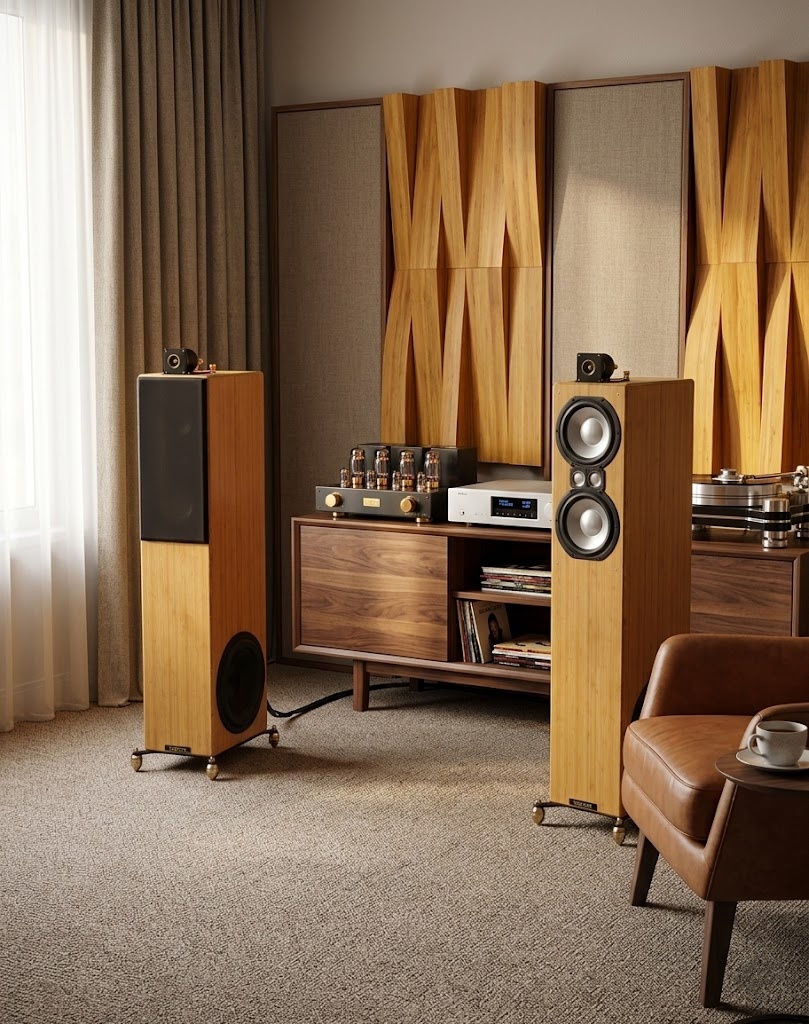
Reflections and Sound Clarity
Hard surfaces such as glass, tile, and bare walls reflect sound. Too many reflections can reduce clarity and make music sound less focused.
Rugs, curtains, upholstered furniture, and other soft materials can help control excessive reflections without turning your living room into a professional studio.
Bass and Speaker Position
Low frequencies interact strongly with walls and corners. Placing speakers too close to a corner may increase bass but can also make it sound heavy or poorly defined.
Experimenting with speaker distance from the walls can produce a cleaner and more balanced response.
Improve Stereo Imaging
Proper positioning helps create a realistic soundstage. Try forming a triangle between the two speakers and your main listening position, then adjust the speaker angle gradually.
A well-balanced setup can make vocals appear centered while instruments occupy distinct positions across the soundstage.
Let Your Speakers Perform Their Best
Room acoustics and speaker quality work together. Before replacing audio equipment, experiment with placement and your listening position—you may discover significant improvements without changing a single component.
Explore handcrafted Hi-Fi speakers designed for detailed, immersive listening:
Need help finding the right speakers for your space?