
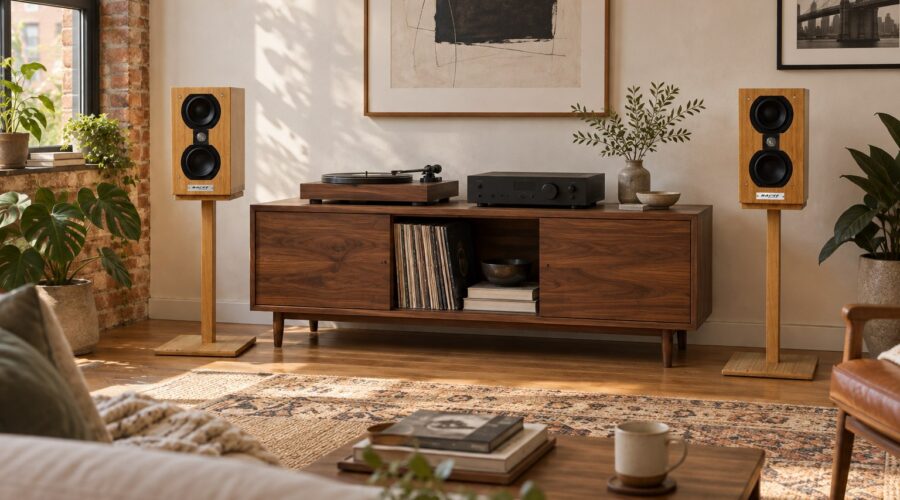
Hi-Fi Speaker Audition in NYC: A Practical Listening Guide
A Hi-Fi speaker audition is most useful when it answers a specific question: will this system make the music you actually play enjoyable in your home? A spectacular demonstration track is a starting point, but familiar recordings, realistic volume, and a few clear notes make a visit much more valuable.
If you are planning a listening session in New York, use this guide to prepare, compare speakers fairly, and leave with information you can use.
Before your Hi-Fi speaker audition
Write down your room dimensions, approximate seating distance, and amplifier model. Describe where the speakers could stand and whether one side of the room opens into another space. A simple sketch is often more useful than describing the room as small or large.
Set a budget for the complete change you are considering. Include stands, delivery, or electronics if needed. Then explain what you would like to improve: clearer voices, more convincing bass notes, a wider listening area, or greater enjoyment at your usual volume.
Build a short playlist you know well
Bring a handful of recordings you regularly enjoy. Familiarity lets you focus on differences without spending the whole session learning new music. Use the same version of each recording when comparing systems.
- A solo voice: listen for believable size and clear words.
- Acoustic instruments: notice the body of a piano or guitar as well as its initial attack.
- A bass line: follow individual notes instead of judging only the amount of bass.
- A busy arrangement: check whether you can still follow the parts you enjoy.
- An ordinary favorite: include something less polished than a demonstration recording.
Keep comparisons fair
Ask to hear speakers at a similar perceived loudness. A louder presentation can make a quick comparison misleading. Start at the level you normally use at home, then include a quieter passage and a brief, comfortable dynamic section.
Keep the source and amplifier consistent where practical. If equipment or placement changes, note that change before attributing everything you hear to the speakers. Spend enough time with each option to listen beyond its first impression.
Listen from more than one seat
Begin in the main listening position, then try another seat you might use at home. Write down whether voices remain easy to follow and whether the tonal balance suits you. A speaker that delights one listener in a narrow position may serve a different purpose from a system used by several people on a sofa.
Remember that the demonstration room is part of the experience. Ask which placement choices were made and what adjustments would be realistic in your room. Avoid expecting an identical result in a different space.
Questions to ask before deciding
- Is my current amplifier suitable for this exact model?
- What placement and listening distance do you suggest?
- Which finishes and configurations are available?
- What are the current delivery, warranty, and return terms?
- What support is available if I need help with setup?
Record your impressions immediately after the session. Simple notes such as “voice clear at low volume” are more useful than trying to remember which system felt most impressive.
Arrange a listening visit in Brooklyn
Bache Audio invites visitors to its sound demonstration room and asks that you make contact before visiting. The listed address is 750 3rd Avenue, Brooklyn, NY 11232. Contact Bache Audio to arrange a listening session and confirm which models are available to hear.
You can also browse the speaker collection and read Bache Audio reviews before preparing your shortlist.
Common questions
Should I bring my own music?
Yes. Share your preferred recordings in advance and ask which playback formats the demonstration system supports.
Do I need to know audio terminology?
No. Explain what you hear in everyday language and describe what you want from your system. The aim is a useful decision, not a vocabulary test.